
Choosing a school is one of those parenting decisions that can feel exciting and overwhelming at exactly the same time.
Start searching for private schools in Greensboro, NC, and you’ll quickly discover that families have plenty of options. You’ll find different grade configurations, educational philosophies, class sizes, extracurricular opportunities, campus environments, and school cultures.
So how do you decide?
The answer isn’t necessarily to find the school with the longest list of programs or the most impressive brochure. It’s to find the school where your child can thrive academically, socially, and personally.
If your family is beginning to compare Greensboro private schools this fall, here are seven things worth considering before you make your decision.
1. Start With Your Child, Not the School
Before scheduling your first tour, think about the child who will actually walk through those school doors every morning.
Does your child thrive in a smaller environment? Do they need opportunities to move and explore? Are they naturally creative? Highly social? Quietly curious? Do they enjoy being challenged independently, or do they flourish with plenty of teacher interaction?
There isn’t one educational environment that’s right for every student.
That’s also why searching online for the best private schools in Greensboro can only take you so far. Rankings and websites can help you build a list, but “best” ultimately depends on the needs, personality, interests, and goals of your child and family.
A better question may be:
Where can I picture my child becoming the best version of themselves?
2. Look Beyond the Curriculum
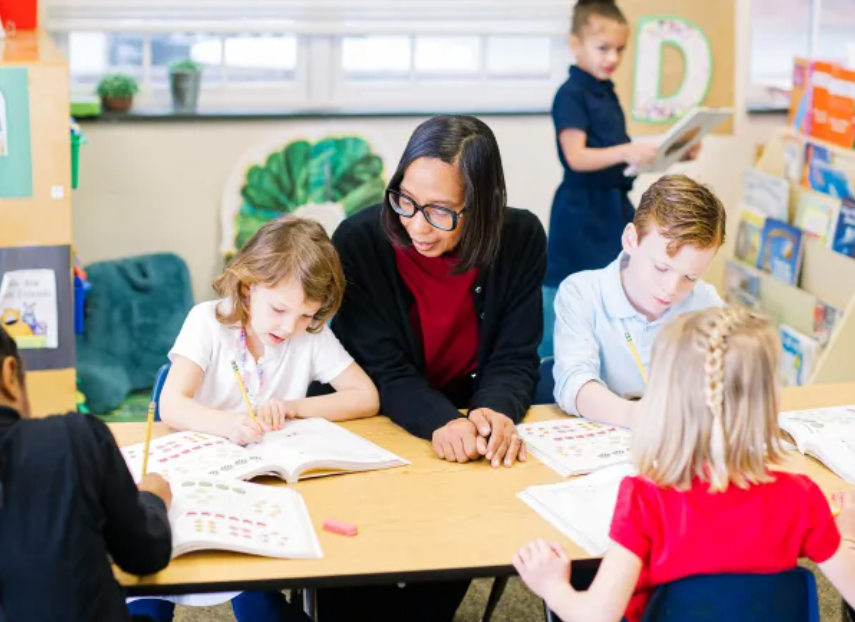
Strong academics matter. But a curriculum guide doesn’t tell you everything you need to know about what learning actually feels like.
As you compare schools, look at how students learn.
Are students encouraged to ask questions? Are they solving problems or primarily memorizing information? Is there a balance between structured instruction and hands-on learning? Do teachers have enough flexibility to respond to the students sitting in front of them?
At Canterbury School, for example, students from preschool through 8th grade build foundations in literacy, mathematics, critical thinking, and communication. Small classes and a thoughtfully sequenced curriculum are designed to provide both support and appropriate challenge as students grow.
That reflects an important distinction to look for at any school: academic rigor shouldn’t simply mean more work. Ideally, it means increasingly meaningful opportunities to think, question, communicate, create, and solve problems.
3. Pay Attention to Relationships
When visiting private schools in Greensboro, NC, it’s easy to focus on the visible things: classrooms, technology, athletic facilities, playgrounds, art studios, and science labs.
Pay equal attention to something harder to put on a brochure: relationships.
Watch how teachers speak with students in the hallway. Notice whether students seem comfortable asking questions. Look at how older and younger students interact. Ask how teachers get to know students beyond their grades.
Especially during the preschool through middle school years, children are developing much more than academic skills. They’re developing confidence, independence, friendships, interests, values, and their sense of who they are.
A school community can play an important role in that process.
At Canterbury, our mission focuses on developing the whole child by challenging the mind and nourishing the spirit. Our preschool–8th grade model is intentionally structured around these foundational years, with an emphasis on intellectual growth, confidence, character, leadership, and responsibility to others.
Learn more about the philosophy behind that approach at Why Canterbury.
4. Consider Who Your Child Can Become There
Parents naturally ask, “What will my child learn?”
It’s also worth asking, “Who will my child have opportunities to become?”
School should give children room to discover interests and abilities they may not know they have yet.
That could happen while performing on stage, attempting a science experiment, learning another language, joining a team, helping a younger student, creating a piece of art, speaking in front of classmates, or taking on a leadership role.
When comparing Greensboro private schools, ask what happens beyond core academic subjects. Look for opportunities in areas such as arts, athletics, service, leadership, outdoor education, technology, enrichment, and spiritual or character development.
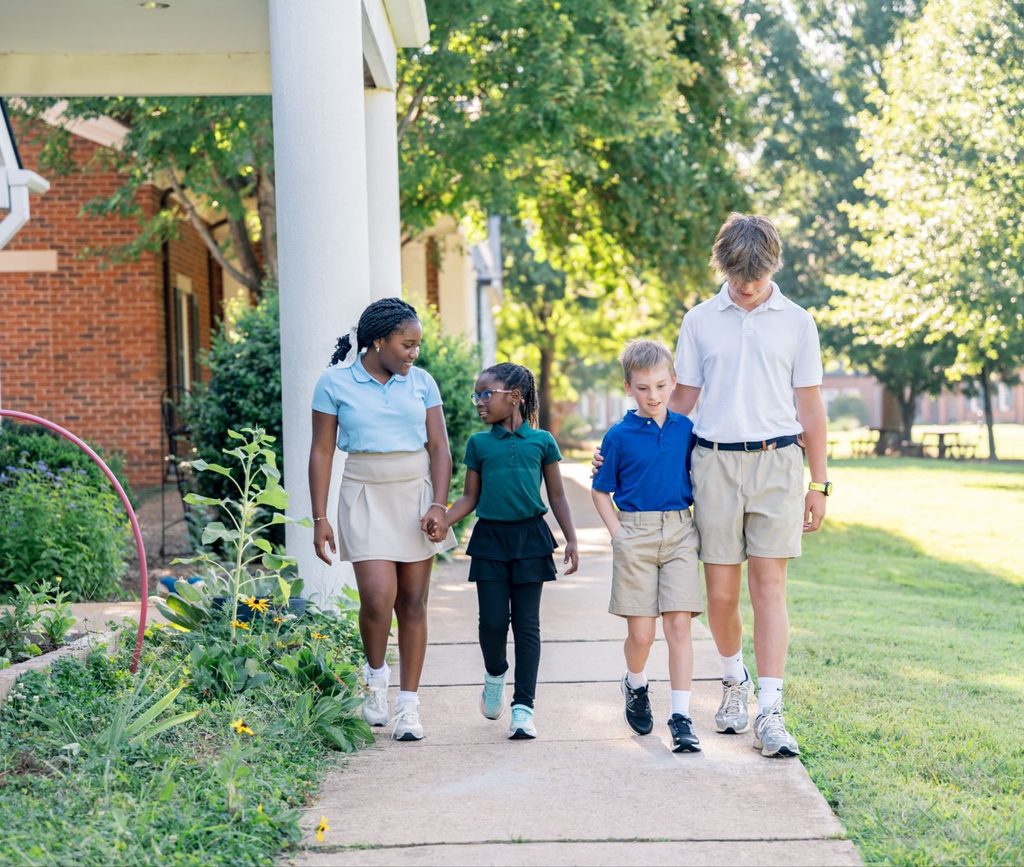
At Canterbury, student life includes arts, athletics, leadership, spiritual life, enrichment, and other experiences beyond the core classroom. Because Canterbury ends in 8th grade rather than continuing through high school, middle school students also have opportunities to become the older student leaders of the community and mentor younger students.
5. Think Beyond the Next School Year
One factor parents sometimes overlook is the ages that the school serves and how the school will grow with their child over time.
A preschool–8th grade school creates a different experience from a K–12 school, just as both differ from a school serving only elementary-aged children.
There isn’t one model that’s automatically better for every family. The important question is what each model means for your child’s experience.
Ask questions such as:
- Who are the oldest students on campus?
- When do meaningful leadership opportunities begin?
- How is middle school designed around the developmental needs of adolescents?
- How does the school prepare students for the transition to high school?
Without a high school on campus, middle school students can occupy the school’s senior student leadership roles rather than waiting until high school for many of those opportunities.
And there’s another meaningful advantage to the preschool–8th grade experience: students have an opportunity to take an active role in choosing what comes next.
The school that feels like the perfect fit for a three-year-old may not be the same school that best suits that student at fourteen. Interests develop. Passions emerge. Priorities shift. By the time Canterbury students begin exploring high school options, they have had years to discover their strengths, build confidence, and develop a stronger sense of who they are and what matters to them.
Rather than approaching the high school search as a decision made entirely for them, students are encouraged to take ownership of the process, reflecting on their interests, considering their goals, asking thoughtful questions, and identifying the environments where they believe they will thrive.
The goal isn’t simply to prepare students to succeed at their next school. It’s to empower them to help choose the school where their next chapter will unfold.
6. Explore the Campus and Ask How Students Use It
A beautiful campus is appealing. What matters more is what children do there.
Do outdoor spaces become extensions of the classroom? Are students given room to move? Are there dedicated spaces for science, arts, athletics, reading, reflection, collaboration, and play?
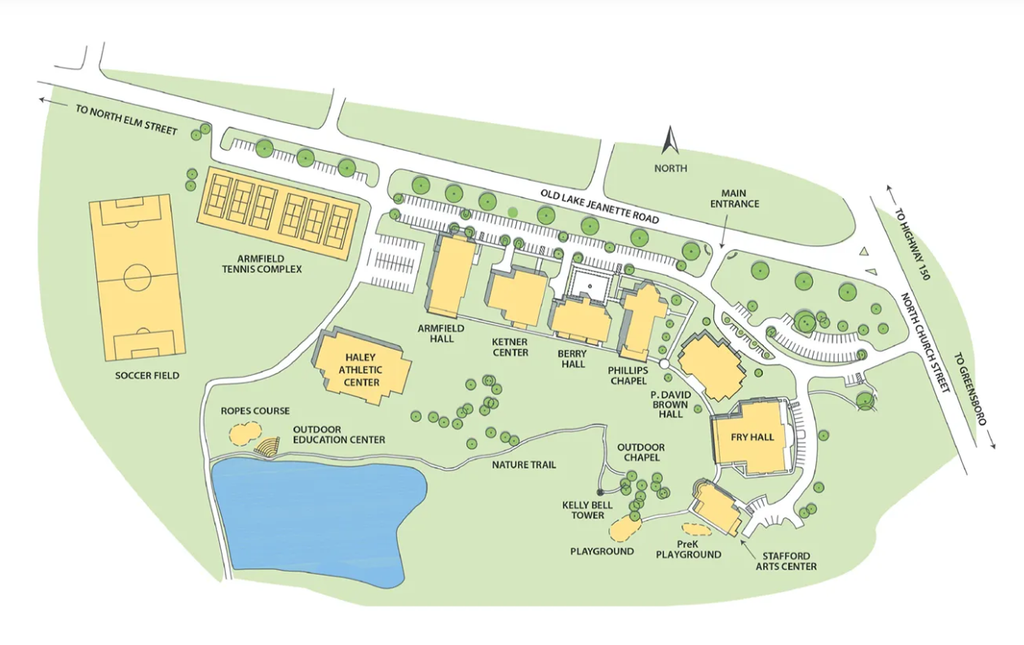
Canterbury’s Greensboro campus spans 37 acres and includes eight permanent buildings as well as playgrounds, athletic spaces, a high and low ropes course, outdoor chapel, greenhouse and gardens, pond, and other outdoor learning and gathering areas.
Those details are useful, but families should go one step further during a tour: ask how often students actually use those spaces and what learning looks like within them.
7. Take the Tour and Pay Attention to How the School Feels
You can learn a tremendous amount about a school online.
You can’t learn everything.
Once you’ve narrowed your list of private schools in Greensboro, NC, visit the campuses you’re seriously considering, preferably while students are there.
Don’t spend the entire tour looking at the facilities. Look at the people.
- Do students seem engaged?
- Are teachers interacting naturally with them?
- Do classrooms feel energetic without feeling chaotic?
- Are children comfortable speaking with adults?
- Can you imagine your child walking through those hallways every day?
And ask questions, the ones that matter specifically to your family.
Canterbury encourages prospective families to visit while school is in session so they can observe classrooms, explore academic and extracurricular opportunities, learn about student leadership, and ask questions about curriculum and community.
There May Not Be a “Best” Private School, But There Can Be a Right One
Parents searching for the best private schools in Greensboro are ultimately looking for something much more personal than a ranking.
They’re looking for a place where their child will be known.
A place where they’ll be appropriately challenged.
A place where they’ll make friends, discover interests, learn from mistakes, develop confidence, and gradually become more independent.
And they’re looking for a community that shares their hopes for the kind of person their child will become.
As you compare Greensboro private schools, give yourself permission to look beyond checklists. Consider academics, certainly, but also relationships, community, character, leadership, creativity, play, and belonging.
Then go see those things for yourself.
See Canterbury in Action
For families considering Canterbury School, the best way to understand the experience is to spend time on campus.
A visit gives you an opportunity to see classrooms in action, meet members of the Canterbury community, explore the campus, and ask the questions that matter. Canterbury currently offers individual tours as well as admissions events for prospective families.
Plan Your Visit to Canterbury School
Because choosing a school isn’t simply about finding a place for your child to attend. It’s about finding a place for them to grow.